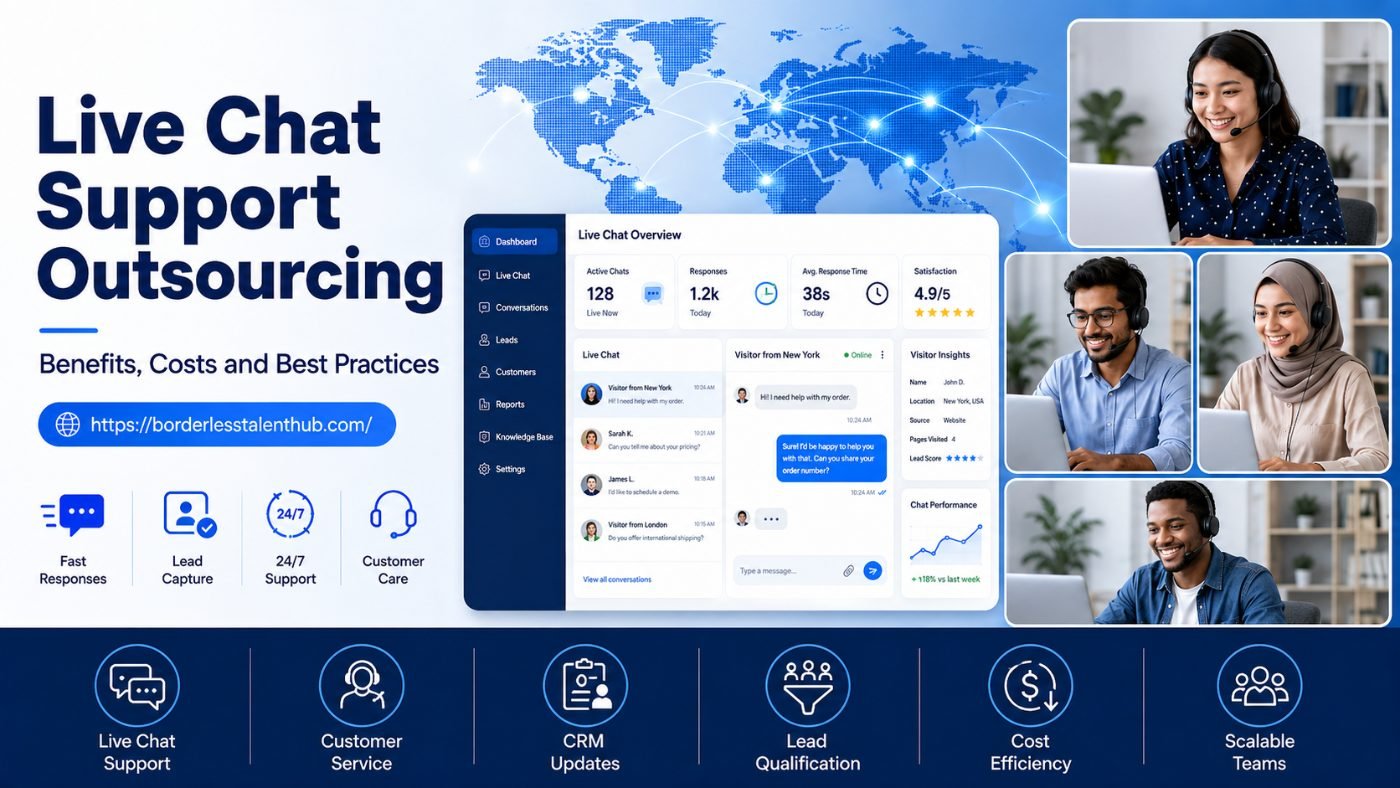
Live Chat Support Outsourcing: Benefits, Costs and Best Practices
Customers expect fast answers. Whether they are asking about a product, checking an order, booking a service, comparing pricing, reporting an issue, or requesting account help, they often want a response within minutes rather than hours.
For many businesses, live chat has become one of the most important customer communication channels. It sits directly on the website, catches visitors while they are actively interested, supports buyers before they leave, and helps existing customers get quick help without making a phone call.
But managing live chat properly takes time, training, process and consistency.
For businesses in Europe, the USA, Canada, Australia and New Zealand, hiring a local in-house team for live chat support can be expensive. Internal teams may already be stretched across sales, operations, customer service, admin, social media, fulfilment and technical queries. As enquiries increase, response times can slow down and valuable leads may be missed.
This is why many businesses now consider live chat support outsourcing.
Live chat support outsourcing allows a company to use trained remote customer support specialists or dedicated support teams to manage live website chats, customer questions, lead capture, booking support, product guidance, basic troubleshooting, escalation, and follow-up tasks.
When set up properly, outsourced live chat support can improve customer experience, reduce missed opportunities, extend service hours, support sales conversations and give internal teams more time to focus on higher-value work.
Borderless Talent Hub helps businesses hire remote specialists, build dedicated teams and manage cross-border workforce operations with recruitment, onboarding, payroll coordination, EOR support and compliance support. You can explore the full service model here: Services | Borderless Talent Hub.
What is live chat support outsourcing
Live chat support outsourcing is the process of using an external remote specialist, customer support assistant or dedicated team to manage live chat conversations for your business.
This can include:
- Answering website visitor questions
- Helping customers find the right service or product
- Capturing leads and contact details
- Supporting booking or appointment enquiries
- Handling order, account or service questions
- Managing simple troubleshooting queries
- Directing complex issues to the right team
- Recording chat notes in a CRM or helpdesk system
- Following up with customers after a chat
- Supporting sales, customer service or technical workflows
Live chat outsourcing works best when the support team is trained in your brand voice, service offering, customer journey, frequently asked questions, escalation process and internal tools.
The goal is not just to “answer messages”. The goal is to help customers quickly, protect your brand reputation, and make sure useful conversations are not lost.
Why live chat support matters for growing businesses
Live chat can support both customer service and sales.
For new website visitors, it can answer questions before they leave. For existing customers, it can reduce frustration by giving them a quick way to ask for help. For internal teams, it can reduce repetitive email and phone enquiries.
Live chat is especially useful for businesses that receive questions about:
- Services and pricing
- Bookings or consultations
- Product availability
- Account access
- Delivery or order updates
- Technical support
- Application processes
- Appointment scheduling
- Onboarding steps
- Customer complaints
- Billing or payment questions
If live chat is available but poorly managed, it can create the opposite effect. A delayed response, unclear answer or missed chat can make the business look unresponsive.
This is where outsourcing can help. A dedicated remote support specialist can monitor chats consistently, respond quickly, keep records organised and escalate issues where needed.
What does outsourced live chat support include
Live chat support can be tailored depending on the business, customer volume, service hours, tools and level of support required.
1. Website visitor support
A live chat assistant can help visitors who are browsing your website and need a quick answer before taking action.
This may include:
- Explaining services
- Directing visitors to the right page
- Answering pricing questions
- Helping users complete a form
- Sharing booking links
- Capturing enquiry details
- Identifying whether the visitor is a potential customer
- Passing qualified enquiries to the internal team
For service-based businesses, this can help turn website traffic into more serious enquiries.
2. Customer service chat
Live chat can be used to support existing customers with everyday questions.
This may include:
- Account updates
- Order or booking questions
- Service progress updates
- Basic troubleshooting
- Document or form guidance
- Appointment changes
- General customer queries
- Follow-up after previous contact
A remote support specialist can help keep these conversations moving so internal staff are not interrupted constantly by repeat questions.
3. Lead capture and qualification
Many website visitors are interested but not ready to call.
Live chat can help capture those opportunities by asking the right questions.
A support specialist can collect:
- Name
- Email address
- Phone number
- Company name
- Country or location
- Service required
- Budget range, where appropriate
- Timescale
- Preferred contact method
- Key notes for the sales team
This makes follow-up more organised and helps the business avoid losing warm leads.
4. Appointment and booking support
For businesses that rely on consultations, demos, service calls or appointments, live chat can support scheduling.
This may include:
- Sharing booking links
- Checking basic availability
- Confirming customer details
- Explaining next steps
- Sending reminders
- Updating CRM notes
- Passing urgent requests to the right person
This can be especially helpful for companies that receive enquiries across different time zones.
5. Technical and helpdesk support
Live chat can also support basic technical or helpdesk queries.
This may include:
- Login issues
- Password reset guidance
- Account setup questions
- Form or portal issues
- Basic product troubleshooting
- Website navigation help
- Common error explanations
- Escalation to technical teams
For more complex issues, the live chat specialist should collect the right information and escalate the case clearly.
6. Escalation and handover
Not every chat can be resolved immediately.
A good outsourced live chat process should define when the support specialist should escalate the conversation.
Escalation may be needed for:
- Complex technical issues
- Complaints
- Refund or cancellation requests
- Legal, finance or compliance questions
- High-value customer enquiries
- Urgent service failures
- Sensitive personal data issues
- Sales conversations requiring a manager
- Questions outside the approved script or knowledge base
Clear escalation rules protect the customer experience and reduce the risk of incorrect answers.
7. CRM and helpdesk updates
Live chat is most useful when conversations are properly recorded.
An outsourced support specialist can help update:
- CRM records
- Customer profiles
- Lead stages
- Chat transcripts
- Follow-up tasks
- Ticket notes
- Enquiry categories
- Escalation status
- Sales pipeline notes
This helps sales, customer service and operations teams see what happened and what action is needed next.
8. Reporting and performance tracking
Live chat performance should be measured.
Useful reports may include:
- Number of chats handled
- Average response time
- Missed chats
- Common enquiry topics
- Leads captured
- Conversations escalated
- Customer satisfaction feedback
- Resolution rate
- Busy periods
- Follow-up completion
- Conversion from chat to enquiry or booking
Regular reporting helps the business understand customer behaviour and improve website content, service pages, FAQs and internal processes.
Benefits of live chat support outsourcing
1. Faster customer response times
Speed matters in live chat.
If a customer starts a chat and waits too long, they may leave the website or contact another provider. Outsourcing gives your business dedicated support coverage so enquiries can be answered more quickly and consistently.
A remote live chat specialist can monitor the chat system during agreed hours and respond while the visitor is still engaged.
2. Fewer missed enquiries
Many businesses lose opportunities because no one is available to respond at the right time.
Live chat outsourcing can help capture enquiries from:
- Website visitors outside office hours
- Customers in different time zones
- Busy periods during the day
- Campaign traffic
- Social media visitors landing on the website
- Prospects comparing service options
- Customers who prefer chat over phone
A missed chat can mean a missed sale. A structured support process reduces that risk.
3. Better customer experience
Customers want quick, clear and helpful answers.
A trained live chat support specialist can improve customer experience by:
- Responding politely
- Giving clear guidance
- Avoiding unnecessary delays
- Asking the right questions
- Recording key details
- Escalating issues properly
- Following up where needed
- Keeping the tone professional and human
Good chat support can make the business feel more accessible and reliable.
4. Lower internal workload
Without live chat support, enquiries often interrupt the same internal people repeatedly.
Founders, managers, sales staff, admin teams or technical teams may spend time answering basic questions instead of focusing on higher-value work.
Outsourcing live chat support helps reduce this pressure by moving repeatable conversations into a dedicated support role.
5. Stronger lead generation
Live chat is not only a customer service tool. It can also support lead generation.
A support specialist can identify interested visitors, ask qualifying questions, capture contact details and pass warm leads to the sales team.
This can improve the value of website traffic, especially for businesses investing in SEO, social media, paid campaigns or content marketing.
6. More flexible service coverage
Many businesses do not need a large in-house customer service department from day one.
Live chat outsourcing allows companies to start with one remote specialist or part-time support, then scale as enquiry volume grows.
This is useful for:
- Startups
- E-commerce businesses
- Service businesses
- Online platforms
- Professional service providers
- Agencies
- Recruitment businesses
- Education providers
- Travel and hospitality businesses
- Customer service-led teams
Borderless Talent Hub’s model is designed to support both single-role hiring and broader team buildouts, with dedicated remote teams suitable for support, operations, sales, customer service and marketing capacity.
7. Cost-effective customer support
Hiring locally can be expensive, especially when the business needs extended hours, weekend coverage or multiple support channels.
Outsourcing can give businesses access to remote support talent with more flexible cost structures.
Borderless Talent Hub lists customer support specialists from £999/month, with typical scope including live chat, email, phone and helpdesk support aligned to the client’s workflows and brand voice.
You can compare support options here: Global Hiring Pricing | Borderless Talent Hub.
How much does live chat support outsourcing cost
The cost of live chat support outsourcing depends on the role, service hours, complexity, language requirements, country of hire, number of chats, tools, training needs and management support required.
Common cost factors include:
- Part-time or full-time support
- Number of hours covered each day
- Weekday, weekend or extended-hour coverage
- Number of chat conversations expected
- Customer service complexity
- Product or service training required
- Whether email or phone support is also included
- CRM or helpdesk updates
- Reporting requirements
- Sales qualification responsibilities
- Technical troubleshooting requirements
- Need for payroll, EOR or compliance support
- Whether the business needs one person or a team
A simple live chat role for general enquiries may cost less than a live chat role that includes technical support, lead qualification, sales follow-up or multi-channel customer service.
The best approach is to define the role clearly before comparing costs.
Live chat support outsourcing cost checklist
Before choosing a support model, ask:
- How many chats do we receive each week
- What times do customers usually contact us
- Do we need weekday, evening, weekend or multi-time-zone coverage
- Should the chat specialist handle customer service only, or also sales enquiries
- Do we need CRM updates after every conversation
- Will the role include email, phone, social media or helpdesk support as well
- How much product or service training is required
- What issues should be escalated internally
- What response time do we want to achieve
- Do we need EOR, payroll or compliance support for the remote hire
This helps the business calculate the true cost and choose the right level of support.
Best practices for live chat support outsourcing
1. Define the purpose of live chat
Before outsourcing live chat, decide what the channel is meant to achieve.
It may be used for:
- Customer service
- Sales support
- Lead capture
- Booking support
- Technical help
- Website guidance
- Complaint handling
- Account support
- Order updates
- General enquiries
A live chat role becomes easier to manage when the purpose is clear.
2. Create a clear chat script and knowledge base
A live chat specialist should not have to guess answers.
Prepare a knowledge base covering:
- Company overview
- Services or products
- Pricing guidance
- Common customer questions
- Booking process
- Refund or cancellation rules
- Delivery or fulfilment information
- Technical troubleshooting steps
- Escalation rules
- Contact details
- Response templates
- Brand tone guidance
This helps the remote specialist respond accurately and consistently.
3. Keep the tone human
Customers do not want robotic replies.
Good live chat communication should be:
- Friendly
- Clear
- Professional
- Short enough to read quickly
- Helpful
- Honest
- Brand-appropriate
- Free from unnecessary jargon
The customer should feel that a real person is helping them, not just copying text from a script.
4. Set response time targets
Live chat is different from email. Customers expect faster replies.
Set realistic targets for:
- First response time
- Average response time
- Resolution time
- Missed chat rate
- Follow-up completion
- Escalation time
These targets should match the size of the team and the hours of coverage.
5. Use proper escalation rules
Live chat specialists should know exactly when to escalate.
Create rules for:
- Urgent customer complaints
- Technical problems
- Payment issues
- Legal or compliance questions
- Data protection concerns
- High-value leads
- Unhappy customers
- Questions outside the approved knowledge base
- Cases requiring manager approval
A clear escalation process prevents mistakes and protects the customer relationship.
6. Train the support team properly
Live chat support needs training, even if the person already has customer service experience.
Good onboarding should cover:
- Brand tone
- Service details
- Customer types
- Chat platform
- CRM or helpdesk system
- FAQs
- Escalation process
- Sales qualification rules
- Data handling expectations
- Quality standards
- Reporting format
Borderless Talent Hub supports role scoping, sourcing, screening, onboarding and wider workforce coordination depending on the chosen model. BTH describes its approach as combining recruitment, payroll coordination and compliance support into one partner model.
You can read more here: How Global Hiring Works | Borderless Talent Hub.
7. Connect live chat with your CRM
Live chat should not sit separately from sales and customer service.
Useful chat information should be added to your CRM or helpdesk system, including:
- Customer name
- Contact details
- Reason for enquiry
- Service interest
- Lead quality
- Follow-up action
- Owner of next step
- Conversation notes
- Escalation status
This helps sales and support teams follow up properly.
8. Review chat quality regularly
Live chat outsourcing should be monitored and improved.
Review:
- Chat tone
- Accuracy of answers
- Response time
- Resolution rate
- Escalation quality
- Customer feedback
- Missed opportunities
- Lead capture quality
- Repeated questions
- Training gaps
Regular reviews help improve both the support team and the website content.
9. Use chat insights to improve your website
Live chat can show what customers are confused about.
If people repeatedly ask the same questions, it may mean the website needs clearer information.
Chat insights can help improve:
- Service pages
- Pricing pages
- FAQ sections
- Booking journeys
- Product descriptions
- Onboarding instructions
- Contact forms
- Help centre articles
- Sales messaging
This turns live chat from a support channel into a useful source of business insight.
10. Start with the right support model
Not every business needs the same setup.
You may start with:
- One part-time live chat assistant
- One full-time customer support specialist
- A combined live chat and email support role
- A customer support specialist with sales qualification duties
- A dedicated remote customer service team
- Extended-hour support across time zones
- Live chat plus helpdesk support
Borderless Talent Hub can help businesses choose the right model based on workload, role requirements, budget and growth plans. Start here: Get Started with Global Hiring | Borderless Talent Hub.
When should a business outsource live chat support
Live chat support outsourcing may be useful if your business:
- Receives regular website enquiries
- Misses chats during busy periods
- Wants faster customer responses
- Needs support across time zones
- Wants to capture more leads from website traffic
- Needs help with booking or appointment enquiries
- Has repetitive customer service questions
- Wants to reduce internal admin pressure
- Needs live chat plus email or helpdesk support
- Cannot justify a large in-house customer service team yet
- Wants to scale customer support gradually
The right time to outsource is usually before slow replies start affecting customer trust or sales performance.
Live chat outsourcing for international businesses
For businesses in Europe, the USA, Canada, Australia and New Zealand, outsourced live chat support can be especially useful because customers may visit the website from different time zones.
A remote live chat team can help provide:
- Extended coverage
- Faster replies
- Better lead capture
- Reduced internal workload
- Consistent service quality
- More organised customer records
- Support during campaigns or growth periods
- Flexible scaling as chat volume increases
This works best when the remote team is properly selected, trained, integrated and managed.
How Borderless Talent Hub can support live chat outsourcing
Borderless Talent Hub helps businesses build remote customer support capacity through structured global hiring and workforce support.
For live chat support outsourcing, this may include:
- Role planning and hiring model guidance
- Remote customer support talent sourcing
- Candidate screening and shortlisting
- Interview coordination
- Onboarding support
- Live chat and workflow integration planning
- Payroll coordination where relevant
- EOR-style support where suitable
- Compliance-focused administration
- Dedicated remote team setup
- Ongoing account and workforce support
This gives businesses a more organised way to add live chat support without managing every part of international hiring alone.
To discuss your support requirements, contact the team here: Contact Us for Global Hiring | Borderless Talent Hub.
Employer checklist before outsourcing live chat support
Use this checklist before getting started:
- Define the purpose of live chat
- List the most common customer questions
- Choose required support hours
- Decide whether the role includes sales qualification
- Prepare response templates and FAQs
- Create escalation rules
- Choose the live chat tool and CRM process
- Set response time targets
- Confirm who reviews chat quality
- Prepare brand tone and customer service guidelines
- Decide whether EOR, payroll or compliance support is required
- Start with a clear pilot period before scaling wider
This helps the outsourced live chat role become structured, measurable and easier to manage.
Final thoughts
Live chat support outsourcing can help businesses respond faster, reduce missed enquiries, improve customer service and capture more value from website traffic.
The best results come when outsourcing is treated as a structured customer communication function, not just a way to answer messages cheaply. Businesses need clear scripts, proper training, CRM integration, escalation rules, quality reviews and a support model that fits their customer volume.
For companies in Europe, the USA, Canada, Australia and New Zealand, remote live chat support can provide flexible customer service capacity without immediately building a large local team.
Borderless Talent Hub helps businesses hire and support remote professionals across live chat support, customer service, technical support, sales support, administration, social media management, payroll coordination, EOR support and dedicated remote team models.
To start planning your next remote customer support hire or outsourced live chat team, visit: Get Started with Global Hiring | Borderless Talent Hub.
If you are a remote professional looking for international opportunities in customer support, live chat, operations, administration, sales support, marketing or other remote-ready roles, you can apply here: Remote Jobs & Careers | Borderless Talent Hub.