
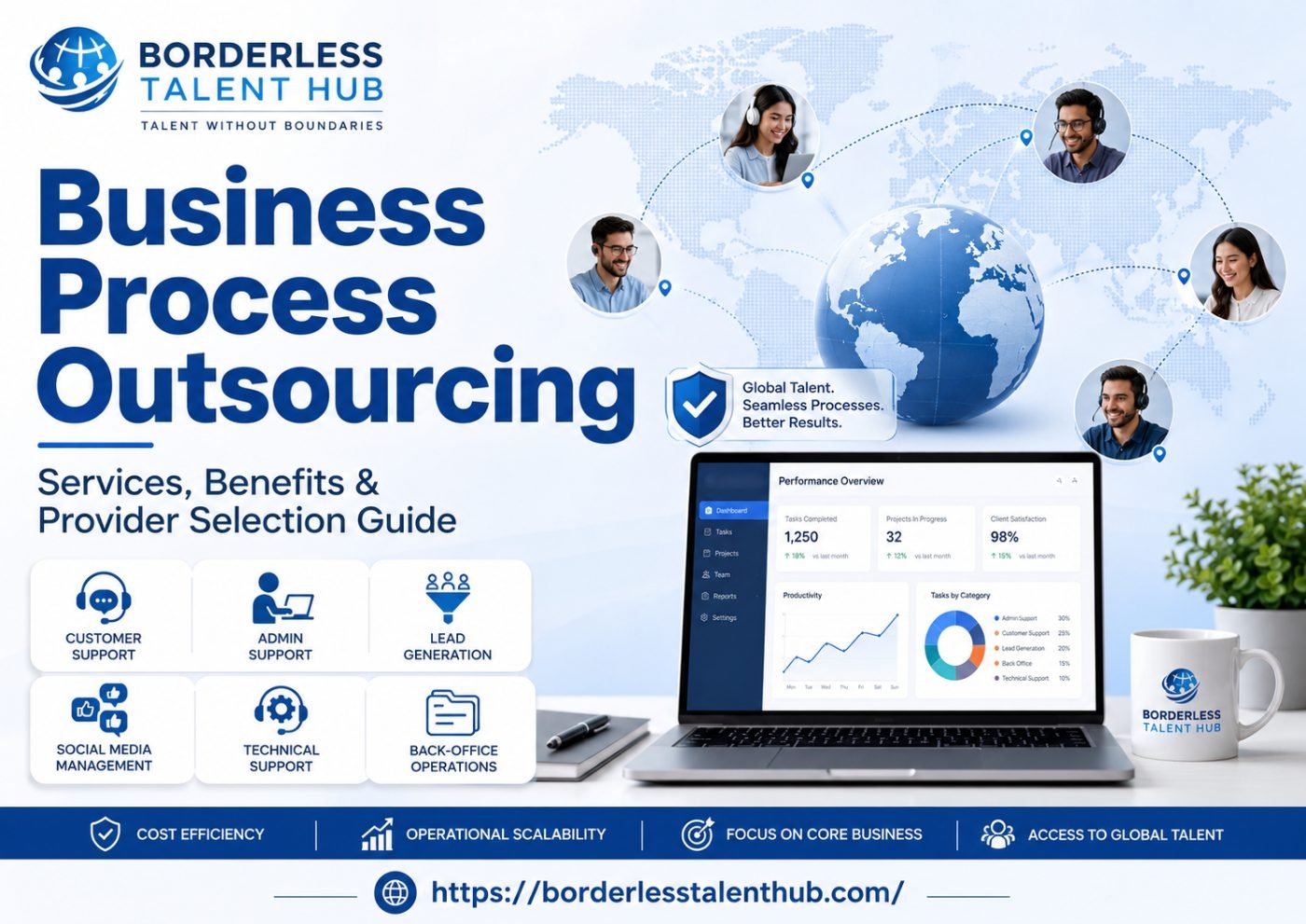
Business process outsourcing, often called BPO, has become a practical way for companies to reduce workload, improve service delivery and build flexible remote teams without adding unnecessary internal complexity.
For businesses in Europe, the USA, Canada, Australia and New Zealand, outsourcing is no longer only about cutting costs. It is about accessing skilled remote talent, improving operational capacity, supporting customers across time zones, and keeping internal teams focused on higher-value work.
A business may outsource customer support, live chat, admin, back-office tasks, lead generation, CRM management, social media support, finance administration, technical support or wider operational processes. When planned properly, BPO can help a company scale faster, respond more consistently and build a stronger operating model.
However, outsourcing should not be treated as simply handing tasks to the cheapest provider. The best results come from choosing the right service model, defining the work clearly, protecting data, setting service standards and selecting a provider that can support recruitment, onboarding, payroll coordination, compliance and ongoing team management.
Borderless Talent Hub helps businesses hire remote professionals, build dedicated teams and manage global workforce support through recruitment, onboarding, Employer of Record support, payroll coordination, compliance administration and ongoing account management. You can explore the full service model here: Services | Borderless Talent Hub.
What is business process outsourcing
Business process outsourcing is when a company works with an external provider or remote team to manage specific business tasks, functions or workflows.
These tasks may be customer-facing, such as customer support and live chat, or internal, such as admin, reporting, CRM updates, payroll coordination, back-office processing and document management.
BPO can be used for one role, one department or a wider operational function.
For example, a company may outsource:
- Customer support enquiries
- Back-office administration
- Virtual assistant support
- Lead generation and sales admin
- CRM data entry and updates
- Social media scheduling
- Technical support tickets
- Finance and bookkeeping admin
- HR coordination
- Order processing
- Live chat support
- Appointment scheduling
- Data processing
- Document preparation
- Remote operations support
The aim is to create a more efficient business operation by giving the right tasks to trained remote specialists while keeping leadership, strategy and core decision-making inside the business.
Why businesses use BPO services
Many businesses reach a point where internal teams are spending too much time on routine work. Emails pile up, customer enquiries wait too long, CRM records become outdated, social media messages are missed, reports are delayed and managers spend time chasing admin rather than growing the business.
BPO services help solve this by adding structured external capacity.
Businesses use outsourcing to:
- Reduce internal workload
- Improve response times
- Access remote talent
- Extend service coverage
- Build support teams faster
- Reduce operating costs
- Improve process consistency
- Support growth without large fixed overheads
- Free internal teams for higher-value work
- Improve customer experience
- Scale departments more flexibly
For many companies, outsourcing is not about replacing the internal team. It is about giving the internal team better support.
Common business process outsourcing services
BPO can cover many functions. The right service depends on the business model, workload, customer expectations and growth plans.
1. Customer support outsourcing
Customer support is one of the most common BPO services.
This can include:
- Email support
- Live chat support
- Phone support
- Helpdesk ticket management
- Customer follow-ups
- Complaint handling
- Order or booking support
- Account enquiries
- Basic technical support
- Escalation coordination
A remote customer support team can help businesses respond faster, manage higher enquiry volumes and provide more consistent service across different channels.
This is especially useful for e-commerce companies, service businesses, online platforms, agencies, education providers, subscription businesses and companies with customers across multiple time zones.
2. Back-office outsourcing
Back-office outsourcing covers administrative and operational tasks that keep the business running behind the scenes.
This may include:
- Data entry
- Document processing
- File organisation
- Report preparation
- Spreadsheet updates
- CRM maintenance
- Invoice tracking
- Internal admin
- Supplier coordination
- Order processing
- Compliance document organisation
Back-office support can reduce pressure on managers and internal teams by ensuring routine tasks are completed accurately and on time.
3. Virtual assistant services
A virtual assistant can support business owners, executives, managers or teams with day-to-day tasks.
Common VA responsibilities include:
- Email inbox management
- Calendar management
- Appointment scheduling
- Meeting preparation
- Travel coordination
- Customer follow-up
- Online research
- Document formatting
- Task tracking
- CRM updates
- Social media scheduling
- Admin support
Virtual assistant outsourcing is often a good starting point for businesses that need flexible remote support but are not yet ready to hire a full internal admin team.
4. Lead generation outsourcing
Lead generation outsourcing helps businesses build and manage sales pipeline activity.
This can include:
- Prospect research
- Lead list building
- CRM updates
- Sales admin
- Outreach preparation
- Appointment setting support
- Follow-up tracking
- Market research
- Lead qualification
- Reporting
A remote lead generation specialist can help sales teams spend more time speaking to qualified prospects and less time managing repetitive research or admin tasks.
5. Social media support outsourcing
Many businesses need regular social media activity but do not have enough internal time to manage it consistently.
Social media outsourcing can include:
- Content scheduling
- Caption preparation
- Graphic coordination
- Inbox and comment monitoring
- Content calendar support
- Hashtag and topic research
- Basic reporting
- Engagement tracking
- Campaign admin
For businesses that need a stronger online presence, a remote social media assistant or social media manager can provide consistent support without requiring an in-house marketing department.
6. Technical support outsourcing
Technical support outsourcing is useful for businesses that need help with product, platform, software or customer access issues.
This can include:
- Helpdesk support
- Ticket triage
- First-line troubleshooting
- Login and account support
- Product guidance
- Technical FAQs
- Escalation to internal teams
- Knowledge base updates
- Customer onboarding support
A remote technical support team can help reduce response times and stop developers, managers or operations teams from being interrupted by repeat support questions.
7. Finance and accounting admin outsourcing
Finance-related outsourcing can support routine finance administration.
This may include:
- Invoice processing
- Payment tracking
- Expense organisation
- Bookkeeping support
- Spreadsheet maintenance
- Supplier follow-up
- Finance document filing
- Monthly report preparation
- Data entry into accounting systems
This is different from regulated financial advice or audit work. For specialist finance, tax or legal requirements, businesses should use qualified professionals in the relevant country.
8. HR and recruitment admin outsourcing
Businesses can also outsource parts of their HR and recruitment administration.
This can include:
- Candidate screening support
- Interview scheduling
- CV organisation
- Onboarding document collection
- Employee record updates
- HR inbox support
- Timesheet coordination
- Training record management
- Policy acknowledgement tracking
This can be helpful for growing companies that need people support but are not ready for a large internal HR team.
Benefits of business process outsourcing
1. Lower operating pressure
One of the biggest benefits of BPO is reducing pressure on internal teams.
When admin, customer support, CRM updates, scheduling or back-office tasks are handled by remote specialists, internal staff have more time to focus on growth, clients, delivery and strategy.
2. Access to skilled remote talent
BPO gives businesses access to a wider talent pool. Instead of being limited to one local hiring market, companies can access remote professionals with relevant experience, communication skills and availability.
This is valuable for businesses hiring across customer support, admin, marketing, operations, sales support and technical support roles.
3. Cost-effective scaling
Outsourcing can be more cost-effective than hiring locally for every role, especially when the business needs flexible capacity or wants to test a function before building a larger team.
Cost efficiency does not mean choosing the cheapest option. It means getting the right skills, structure and reliability for the budget.
You can compare remote staffing and global hiring options here: Global Hiring Pricing | Borderless Talent Hub.
4. Faster team setup
Building an internal team can take time. BPO can help businesses move faster by using existing recruitment, onboarding and remote team management processes.
This is useful when a business needs support quickly for customer service, admin, lead generation, social media, technical support or back-office operations.
5. Improved customer experience
A well-managed outsourced support team can improve response times, reduce missed enquiries and provide more consistent communication.
This can help customers feel supported and reduce complaints caused by slow replies or unclear processes.
6. Better process consistency
Outsourcing encourages businesses to document workflows, define responsibilities and create clear service standards.
This can improve how tasks are managed, reported and reviewed.
7. Flexible growth model
BPO allows companies to start with one remote specialist and scale into a larger team when demand grows.
A business may begin with one virtual assistant, then add customer support, lead generation, social media support and back-office roles over time.
8. More focus for internal leaders
Business owners, managers and senior staff often spend too much time on routine tasks. Outsourcing gives them more space to focus on customers, partnerships, growth plans, service quality and strategic decisions.
Business process outsourcing costs
BPO costs depend on the role, country, skill level, working hours, tools, complexity, support model and whether payroll or compliance support is required.
Common cost factors include:
- Type of role
- Part-time or full-time support
- Seniority and experience
- Country or region of talent
- Working hours and time zone coverage
- Number of team members needed
- Customer-facing responsibility
- Technical complexity
- Tools and systems used
- Training requirements
- Management and reporting needs
- Payroll coordination
- Employer of Record support
- Compliance administration
- Dedicated account support
A basic admin role will usually cost less than specialist technical support, finance administration or team leadership. A one-person remote support role will cost less than a full multi-shift customer service team.
The best approach is to calculate the total cost of the operating model, not just the monthly salary.
Cost checklist before outsourcing
Before choosing a BPO model, ask:
- Which tasks do we want to outsource
- Are these tasks daily, weekly, seasonal or project-based
- Do we need one person or a team
- Is the role part-time or full-time
- What time zone coverage is required
- Will the outsourced team communicate with customers
- What systems and tools will they need
- How much training is required
- Who will manage the team day to day
- What data or documents will they access
- Are there compliance or payroll requirements
- Can the model scale as the business grows
This checklist helps avoid underestimating the real cost and effort of running an outsourced function properly.
Risks of outsourcing without the right structure
BPO can be very effective, but poor setup can create problems.
Common risks include:
- Unclear role responsibilities
- Poor onboarding
- Weak communication
- Inconsistent service quality
- Data security issues
- Lack of performance tracking
- No escalation process
- Misalignment with company culture
- Poor documentation
- High turnover
- Worker classification issues
- Payroll or compliance gaps
Most of these risks can be reduced with proper planning, clear processes and the right provider.
How to choose a BPO provider
Choosing the right provider is one of the most important decisions in outsourcing.
A good provider should not only supply people. It should help you define the role, set up the process, manage onboarding, support communication and keep the arrangement organised as your team grows.
1. Check service fit
Start by asking whether the provider can support the specific function you need.
For example:
- Customer support
- Virtual assistant support
- Back-office admin
- Lead generation
- Social media support
- Technical support
- Finance admin
- HR support
- Dedicated remote teams
A provider that understands the role will be better placed to source suitable talent and support onboarding.
2. Review hiring and screening process
Ask how candidates are sourced and screened.
The provider should understand:
- Required skills
- Communication standards
- Remote working ability
- Industry experience
- Tool familiarity
- Time zone requirements
- Culture fit
- Reliability and professionalism
The wrong hire can cost more than a slightly higher monthly fee for a better-matched candidate.
3. Understand onboarding support
Good outsourcing depends on smooth onboarding.
Ask whether the provider supports:
- Role briefing
- Documentation collection
- Contract coordination
- Payroll setup
- Tool access planning
- First-week support
- Communication structure
- Training preparation
- Ongoing check-ins
A remote worker should not be left to figure everything out alone.
4. Ask about payroll and compliance support
If the worker is based internationally, payroll and compliance should be considered before the hire starts.
Ask whether the provider can support:
- Payroll coordination
- Employer of Record support where suitable
- Employment documentation
- Worker classification considerations
- Local process coordination
- Ongoing account support
Borderless Talent Hub supports businesses with global hiring, payroll coordination, EOR support and compliance-focused administration. You can learn more here: How Global Hiring Works | Borderless Talent Hub.
5. Check reporting and performance visibility
A BPO provider should help you keep visibility over work quality and progress.
Useful reporting may include:
- Tasks completed
- Response times
- Tickets handled
- Leads researched
- CRM updates
- Customer feedback
- Attendance or shift coverage
- Escalations
- Quality issues
- Weekly summaries
This helps the business stay in control even when the team works remotely.
6. Review communication process
Remote teams need clear communication.
Ask how the provider manages:
- Day-to-day communication
- Escalations
- Account support
- Performance reviews
- Replacement or backup support
- Issue resolution
- Scaling requests
A good provider should make outsourcing feel structured, not disconnected.
7. Look for transparent pricing
Avoid unclear pricing, hidden charges or vague monthly costs.
Before starting, understand:
- Monthly service cost
- Role cost
- Payroll or EOR fees
- Setup fees, if any
- Management support included
- Replacement policy
- Notice terms
- Additional costs for scaling
Transparent pricing makes budgeting and decision-making easier.
8. Check scalability
A provider should be able to support growth.
You may start with one virtual assistant today, but later need customer support, social media, lead generation, technical support or a wider operations team.
A scalable provider can help you grow the model without rebuilding everything from scratch.
BPO provider selection checklist
Before choosing a provider, use this checklist:
- Do they understand the role and business function
- Can they source suitable remote talent
- Do they support screening and shortlisting
- Can they help with onboarding
- Do they provide payroll coordination where needed
- Can they support EOR or compliance requirements
- Is pricing clear and predictable
- Will you have ongoing account support
- Can they scale from one role to a full team
- Do they help with performance tracking
- Are communication and escalation routes clear
- Do they understand remote team management
- Can they support multiple business functions
If a provider cannot explain how the arrangement will work after the hire starts, that is a warning sign.
Best practices for successful BPO
1. Define the process before outsourcing
Write down the tasks, tools, deadlines, quality expectations and escalation steps before the outsourced team begins.
2. Start with a clear role brief
A strong role brief should explain responsibilities, working hours, required skills, reporting lines, customer contact, tools and success measures.
3. Prepare training materials
Training should include company background, services, FAQs, systems, brand tone, customer types, data protection rules and example tasks.
4. Use measurable KPIs
Track quality and productivity using relevant KPIs.
Examples include:
- Response time
- Ticket resolution time
- CRM accuracy
- Tasks completed
- Lead quality
- Customer satisfaction
- Error rate
- Follow-up completion
- Escalation quality
5. Keep communication regular
Use weekly check-ins, written updates and clear task boards to keep everyone aligned.
6. Protect data and access
Only give outsourced workers access to the systems and documents they need. Use password controls, permissions, secure file sharing and clear access removal rules.
7. Review quality early
Do not wait months to review work quality. Check output during the first week and first month so issues can be corrected quickly.
8. Document improvements
As the team learns, update processes, templates and checklists. This makes the outsourced function easier to scale.
9. Treat remote workers as part of the team
The best results come when remote staff understand the business, feel included and know how their work supports wider goals.
10. Scale gradually
Start with the most important task or role, then expand once the model is working.
When should a business consider BPO
Business process outsourcing may be suitable if:
- Your team is overloaded with admin
- Customers wait too long for replies
- Sales teams need lead generation support
- CRM data is not being updated
- Social media tasks are inconsistent
- Back-office work is slowing down operations
- Managers are spending too much time on routine tasks
- Hiring locally is too slow or expensive
- You need time zone coverage
- You want to test a role before hiring locally
- You are scaling into new markets
- You need a more flexible operating model
If these problems are recurring, outsourcing may help create a more stable and efficient workflow.
How Borderless Talent Hub supports business process outsourcing
Borderless Talent Hub helps businesses build remote teams and outsourced support functions through a structured global hiring model.
Support can include:
- Role scoping and workforce planning
- Remote talent sourcing
- Candidate screening and shortlisting
- Interview coordination
- Onboarding support
- Payroll coordination
- Employer of Record support where suitable
- Compliance-focused administration
- Dedicated remote team setup
- Ongoing account and workforce support
- Scaling from one role to wider teams
This gives businesses a more organised way to outsource key processes without managing every recruitment, payroll, compliance and onboarding detail alone.
To discuss your outsourcing requirements, contact the team here: Contact Us for Global Hiring | Borderless Talent Hub.
Final thoughts
Business process outsourcing can help companies reduce workload, improve service delivery, access remote talent and scale operations more efficiently.
The best results come when outsourcing is treated as a structured business model, not just a cost-saving exercise. Businesses need clear role definitions, proper onboarding, strong communication, secure data handling, measurable KPIs and a provider that can support the full journey from hiring to ongoing team management.
For businesses in Europe, the USA, Canada, Australia and New Zealand, BPO can provide flexible support across customer service, admin, virtual assistance, lead generation, social media, technical support, finance admin and back-office operations.
Borderless Talent Hub helps businesses hire and support remote professionals across business process outsourcing, customer support, virtual assistance, sales support, administration, social media management, payroll coordination, EOR support and dedicated remote team models.
To start planning your outsourced support role or wider remote team, visit: Get Started with Global Hiring | Borderless Talent Hub.
If you are a remote professional looking for international opportunities in customer support, admin, virtual assistance, operations, sales support, marketing or other remote-ready roles, you can apply here: Remote Jobs & Careers | Borderless Talent Hub.